
Labuan Malaysia Country-by-Country Reporting Guidelines
Knowledge • Labuan Malaysia Country-by-Country Reporting Guidelines
Knowledge • Labuan Malaysia Country-by-Country Reporting Guidelines
On 26 December 2017, Malaysia Inland Revenue Board (“IRB”) gazetted the Country-by-Country reporting (“CbCR”) regulations for Labuan entities. The implementation of CbCR will take effect for the financial year starting on and after 1 January 2017. On 1 January 2019, IRB published CbCR Guidelines for Labuan entities.
In Malaysia, CbCR is governed by two separate regulations as follows:
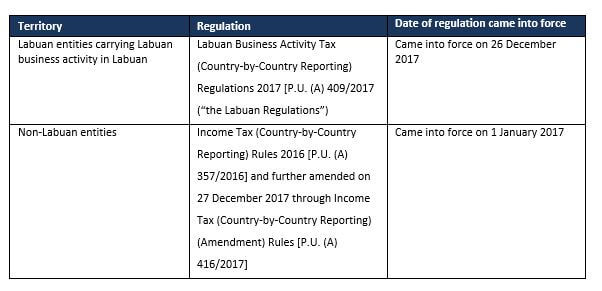
Labuan is a Federal Territory of Malaysia that maintains its own independent corporate laws and taxation regime from the rest of Malaysia.
Labuan Malaysia Country-by-Country Reporting Guidelines 2019 require careful attention and compliance from multinational enterprises (MNEs) operating in Labuan. We offer comprehensive services to ensure that your CbCR obligations are met efficiently and accurately. With our support, you can navigate the complexities of CbCR in Labuan confidently, ensuring compliance and minimising risks associated with non-compliance.
Our services include:
With our support, you can navigate the complexities of CbCR in Labuan confidently, ensuring compliance and minimizing risks associated with non-compliance.
On 30 July 2026, the Inland Revenue Board of Malaysia (IRBM) released its new Malaysia Transfer Pricing Guidelines on Controlled Financial Transactions: Intra-Group Loans (MFTIL). The guidance provides a comprehensive framework for assessing, pricing and documenting intra-group loans under Malaysia’s transfer pricing regime.
Malaysia’s transfer pricing framework continues to evolve, with the Inland Revenue Board of Malaysia applying increasing scrutiny to how multinational groups price, document and defend related‑party transactions. For businesses operating in Malaysia, transfer pricing has become a core tax risk area rather than a routine compliance exercise.
As tariff wars intensify, government deficits balloon, and supply chains fragment, the OECD’s 15% global minimum tax has shifted from a technical compliance issue to a strategic imperative reshaping how and where multinational enterprises compete.